- MoonCrawler
- Posts
- Celebrating Bhanu Jayanti: Lessons to Share with Your Children About AdiKavi Bhanu Bhakta Acharya
Celebrating Bhanu Jayanti: Lessons to Share with Your Children About AdiKavi Bhanu Bhakta Acharya

Bivek Chettri
July 12, 2024
(snippet)
Discover the inspiring legacy of AdiKavi Bhanu Bhakta Acharya this Bhanu Jayanti. Learn how his contributions to Nepali literature can teach our children valuable lessons about dedication, creativity, and cultural pride.
Introduction
Bhanu Jayanti, celebrated on July 13th, honors the birth anniversary of Adi Kavi Bhanu Bhakta Acharya, the revered poet who profoundly shaped Nepali literature. As parents, sharing his story and contributions with our children can instill a sense of cultural pride and teach important values.
Background of Adikavi Bhanu Bhakta

Adikavi Bhanu Bhakta Acharya, born in 1814 in Tanahun, Nepal, is celebrated as the first poet to translate the epic Ramayana into Nepali, making it accessible to the common people. His works have left an indelible mark on Nepali literature, and his legacy continues to inspire generations.
The Legacy of Bhanu Bhakta: Contribution
1. Translation of the Ramayana
Bhanu Bhakta's translation of the Ramayana into Nepali was a monumental achievement. It brought the epic's moral and spiritual teachings to the masses, fostering a sense of unity and cultural identity.
2. Promotion of Nepali Language and Culture
Through his poetry, Bhanu Bhakta emphasized the beauty and richness of the Nepali language. His works encouraged people to take pride in their linguistic heritage and cultural traditions.
3. Inspiration for Future Writers
Bhanu Bhakta's dedication to literature and his ability to communicate profound ideas in simple language have inspired countless writers and poets. His legacy serves as a beacon for those aspiring to contribute to Nepali literature.
Famous Poem “Ghasi” by AdiKavi Bhanu Bhakta Acharya
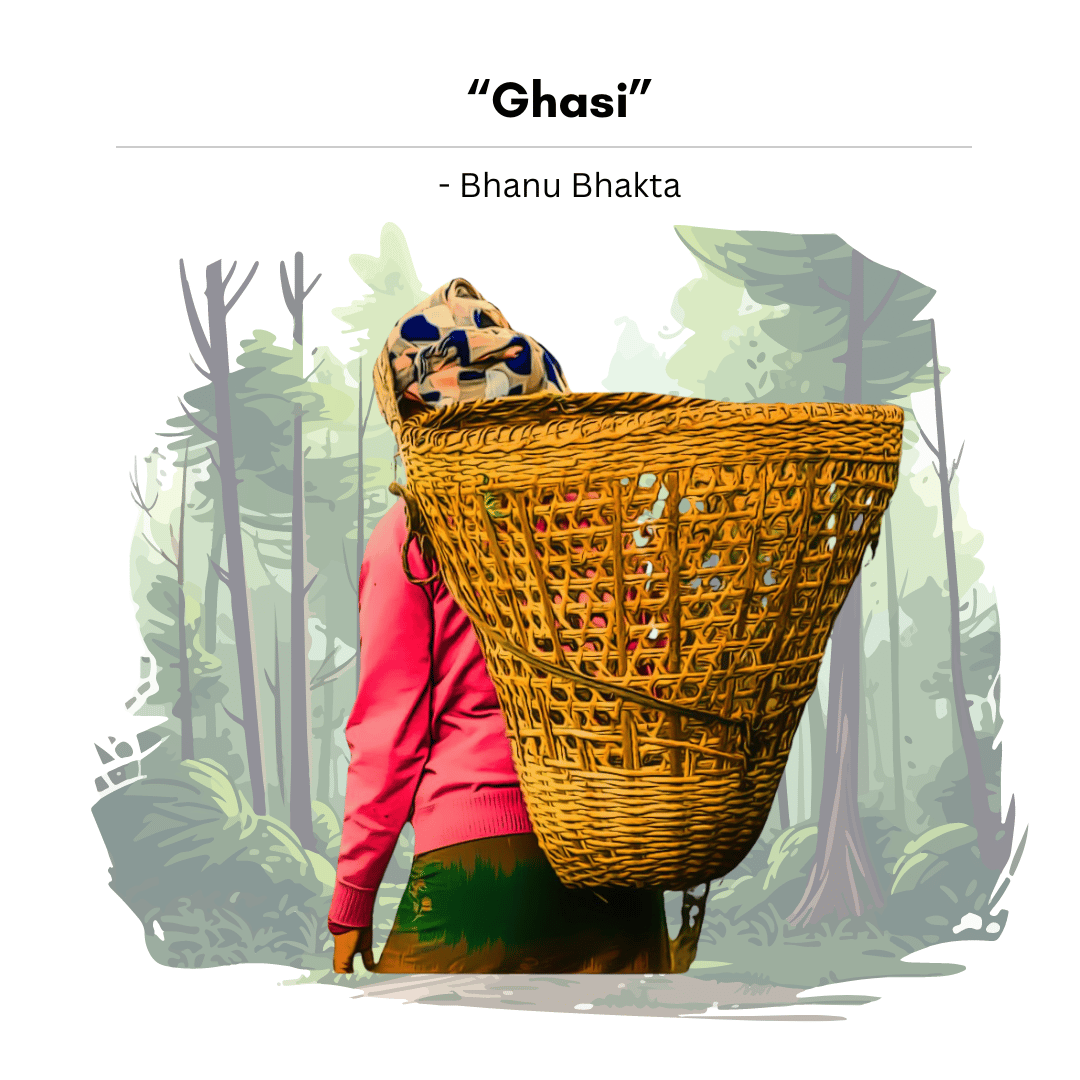
भर् जन्म घाँस तिर मन् दिई धन कमायो
नाम क्यै रहोस् पछि भनेर कुवा खनायो ।
घाँसी दरिद्र घरको तर बुद्धि कस्तो
म भानुभक्त धनी भैकन किन यस्तो ।
मेरा ईनार न त सत्तल पाटिकै छन्
जे धन चीजहरु छन् घर भित्रनै छन् ।
त्यस घाँसीले कसरी आज दिए छ अर्ति
धिक्कार हो म कन बस्नु न राखि किर्ति ।
Summary:
In this poem, Adi Kavi Bhanu Bhakta Acharya reflects on the life and wisdom of a humble grass-cutter, or "ghasi," who worked tirelessly throughout his life. Despite his poverty, the grass-cutter dedicated himself to his work, earning money by cutting grass. With a desire to leave a lasting legacy, he dug a well for the community, ensuring that his name would be remembered long after he was gone.
Bhanu Bhakta contrasts the grass-cutter's wisdom and selflessness with his own life. Despite being wealthy, Bhanu Bhakta realizes he has not used his resources to make a meaningful contribution to society. He acknowledges that while he possesses wealth and material comforts, he has not constructed wells, rest houses, or public shelters that could benefit others.
The poem concludes with Bhanu Bhakta feeling a sense of shame and inspiration. He is humbled by the grass-cutter's actions and resolves to create a lasting legacy of his own, realizing that true greatness comes from contributing to the welfare of others, regardless of one's social or economic status.
Nurturing Legacy and Cultural Pride in our Children
Bhanu Bhakta's life and works offer rich lessons in dedication, cultural pride, and the importance of contributing to society. Sharing these stories with our children not only educates them about an important literary figure but also instills values of perseverance, humility, and pride in their heritage.
MoonCrawler’s Mission & Vision
At MoonCrawler, we are dedicated to providing tips and support for parents to help their children grow and develop using effective parenting techniques. By celebrating figures like Adi Kavi Bhanu Bhakta, we aim to nurture our children's minds and hearts with human values.
Join our Community
Join our community by subscribing to the MoonCrawler newsletter for more inspiring stories and parenting tips to help your children thrive and develop a love for learning and creativity.